
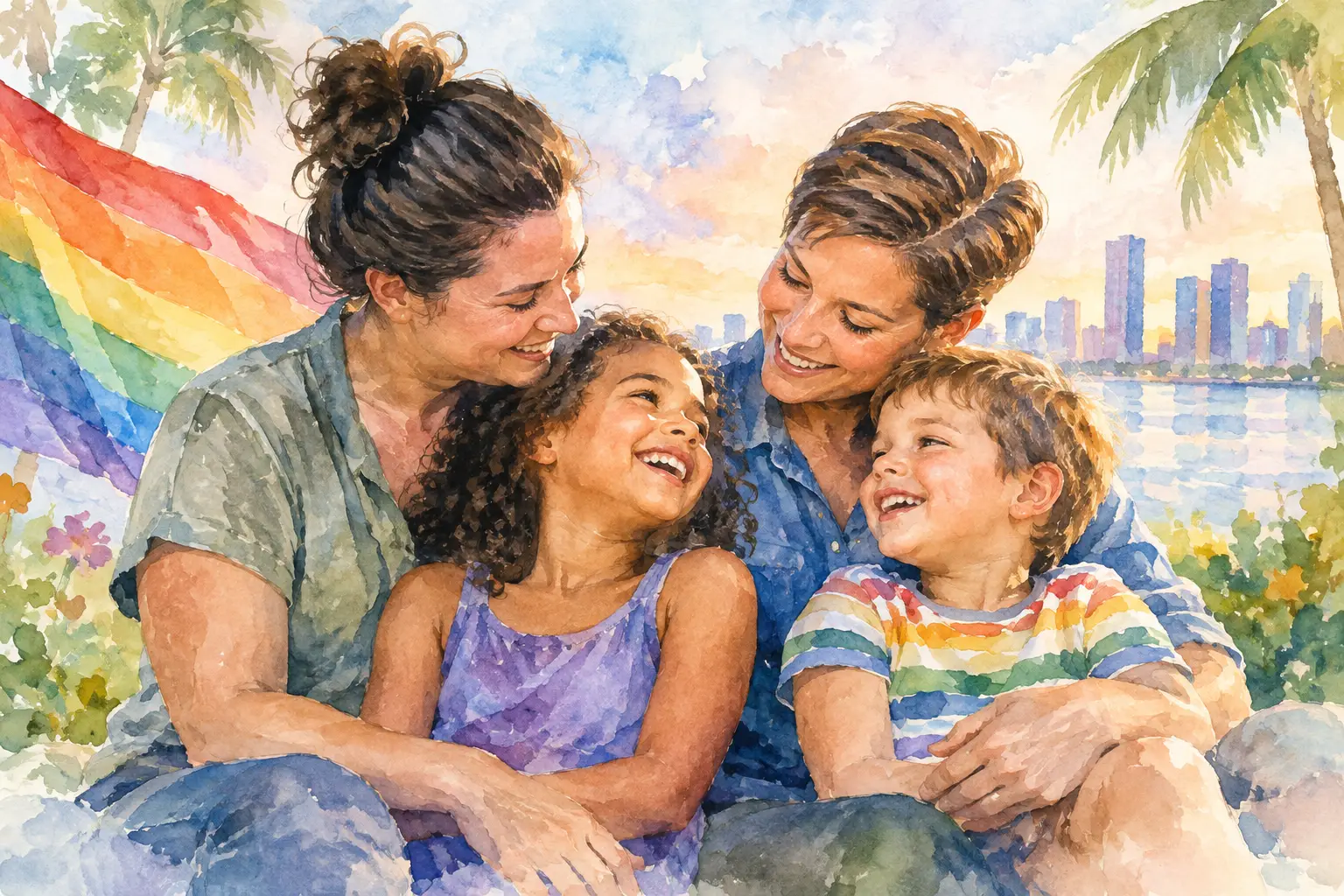
What LGBTQ Adoption in Florida Looks Like
For people researching LGBTQ adoption, Florida can bring up a very personal question: will our family be welcomed, respected, and legally protected? The answer is that qualified LGBTQIA+ adults can pursue adoption in Florida. Still, feeling eligible and feeling prepared are different things. A thoughtful process should make room for your hopes, your questions, and the practical decisions that help create security for a child and everyone who loves them.
Adoption is not one path with one finish line. Whether you are hoping to adopt an infant, considering foster care adoption, or open to adopting an older child, the right next step depends on your family, your resources, and the type of relationship you hope to build.
LGBTQ Adoption in Florida Starts With Eligibility
Florida adoption law does not place a categorical ban on LGBTQIA+ people adopting. Single adults and married couples can be considered to adopt, provided they meet the same core requirements expected of any prospective adoptive parent. Agencies, home study professionals, attorneys, and courts focus on a prospective parent’s ability to provide a safe, stable, and nurturing home.
That assessment is broader than income, marital status, or a checklist of household details. It considers your support system, physical and emotional readiness, parenting plans, home safety, background screening, and the life you can offer a child. No family is expected to be perfect. The goal is to understand how you will meet a child’s needs with consistency and care.
Relationship status can affect the legal route, particularly when two unmarried partners want to establish legal parentage. Married couples may generally petition together, while a single person may adopt independently. For unmarried couples, the options for securing each parent’s legal relationship with the child can depend on the circumstances of the case. Individual legal guidance is especially valuable before a placement, not after, when choices may be more limited.
Gender identity, sexual orientation, race, religion, disability, and family structure can all be part of a family’s lived experience. They should be approached with respect, not treated as a problem to explain away. A good adoption professional helps you present your family honestly and warmly while preparing you for questions that may arise during the process.
The Home Study Is Preparation, Not a Test of Perfection
The home study can feel intimidating because it is both personal and required. You may be asked about your childhood, relationships, health history, finances, support network, parenting beliefs, and reasons for choosing adoption. There will also be background checks, references, required education, and a home safety review.
For LGBTQIA+ families, a home study should also be a place to talk openly about the support around you. Who will show up in a crisis? How will you respond if a child experiences bias at school or in the community? How will you speak about adoption, identity, and a child’s history in age-appropriate ways? These are meaningful parenting conversations, not traps.
The best preparation is honest preparation. If you have experienced infertility, loss, discrimination, or a complicated path to becoming a parent, you do not have to erase those experiences. You do need space to process them so a child’s story can remain centered on their needs, rather than carrying the weight of an adult’s past disappointment.
Choosing an Adoption Path That Fits Your Family
Private infant adoption, foster care adoption, and older child private adoption each offer a different experience. None is inherently better. The right path is the one you can approach with informed expectations and a real commitment to the child at the center of it.
In private infant adoption, prospective adoptive parents create a profile that may be shown to expectant parents considering adoption. An expectant parent may want to learn about your everyday life, values, extended family, pets, traditions, and hopes for an ongoing connection. They may also have preferences about contact after placement. Open adoption can look many different ways, from photos and letters to calls, visits, or another arrangement that everyone agrees supports the child.
This is not a competition between families. Expectant parents deserve informed choice and support without pressure. Prospective parents deserve clear, compassionate guidance about what matching can involve, including uncertainty. A match is meaningful, but it is not a guarantee until legal steps are complete.
Foster care adoption often involves children who are older, sibling groups, or children with specific emotional, medical, or educational needs. Families considering this route should be ready to learn about trauma-informed parenting, services, and the importance of preserving a child’s connections and history. The need is significant, but so is the preparation required. Love matters deeply, and it works best alongside training, patience, and practical support.
Matching With Care and Respect
A family profile should feel like a truthful introduction, not a marketing brochure. It can share the small details that make a home feel real: weekend routines, favorite meals, family traditions, community ties, and the people who will be part of a child’s village. For LGBTQIA+ parents, it can also reflect your family with confidence and warmth rather than treating your identity as a disclaimer.
At the same time, respectful matching means recognizing that expectant parents may have their own values, concerns, and hopes. Some may specifically want an LGBTQIA+ family. Others may be considering many different family structures. Their choice must remain their own, and they should have independent advocacy and support as they make it.
This approach protects everyone from the feeling that adoption is a transaction. It honors the fact that adoption begins with a major decision for an expectant parent and becomes a lifelong story for a child.
Legal and Hospital Planning Deserve Close Attention
Florida adoption involves legal consents, termination of parental rights, court filings, and post-placement requirements. The timing and details can vary based on the circumstances, including whether the adoption is private, through foster care, or involves more than one state. If an expectant parent and adoptive family live in different states, additional interstate requirements may apply before a child can travel home.
Hospital planning is equally personal. An expectant parent may want time alone with the baby, may want adoptive parents present for certain moments, or may prefer another arrangement. There is no single “right” plan. The purpose of planning is to reduce confusion in an emotional moment and make sure everyone understands their role, choices, and support.
Working with professionals who coordinate communication can make a profound difference here. Going Adoption and Surrogacy supports families through these sensitive stages with individualized guidance, including preparation for placement and the days that follow.
What to Look for in LGBTQIA+-Affirming Support
Feeling welcomed on a website is a start, but genuine inclusion shows up in the details. Before choosing an agency or professional, pay attention to whether they can clearly explain their process and whether their language reflects respect for every person involved.
Look for four practical signs of affirming support:
- Education that addresses the realities of LGBTQIA+ parenting without making you feel singled out.
- Home study guidance that welcomes your full family story and prepares you thoughtfully.
- Ethical support for expectant and birth parents, including independent choice and nonjudgmental counseling.
- Continued availability after placement, when questions about adjustment, openness, and legal next steps may still arise.
It is also reasonable to ask direct questions. How do they support unmarried partners seeking to protect both parent-child relationships? How do they prepare families for open adoption? Who is available when a hospital plan changes? How do they advocate for expectant parents? Clear answers are a sign that a provider understands both the emotional and operational sides of adoption.
Building a Family With Room for the Whole Story
LGBTQ adoption in Florida is not about proving that your family belongs. Your family already has inherent worth. The adoption process is about demonstrating readiness to care for a child whose life, history, and relationships deserve tenderness and respect.
There may be moments of waiting, paperwork, uncertainty, and big emotion. There can also be moments of extraordinary connection. Give yourself permission to ask detailed questions, seek legal clarity when your situation calls for it, and choose support that treats every member of the adoption story as a person, not a process. A child deserves a home built not on perfection, but on steady love, honesty, and the confidence that they will be known.