
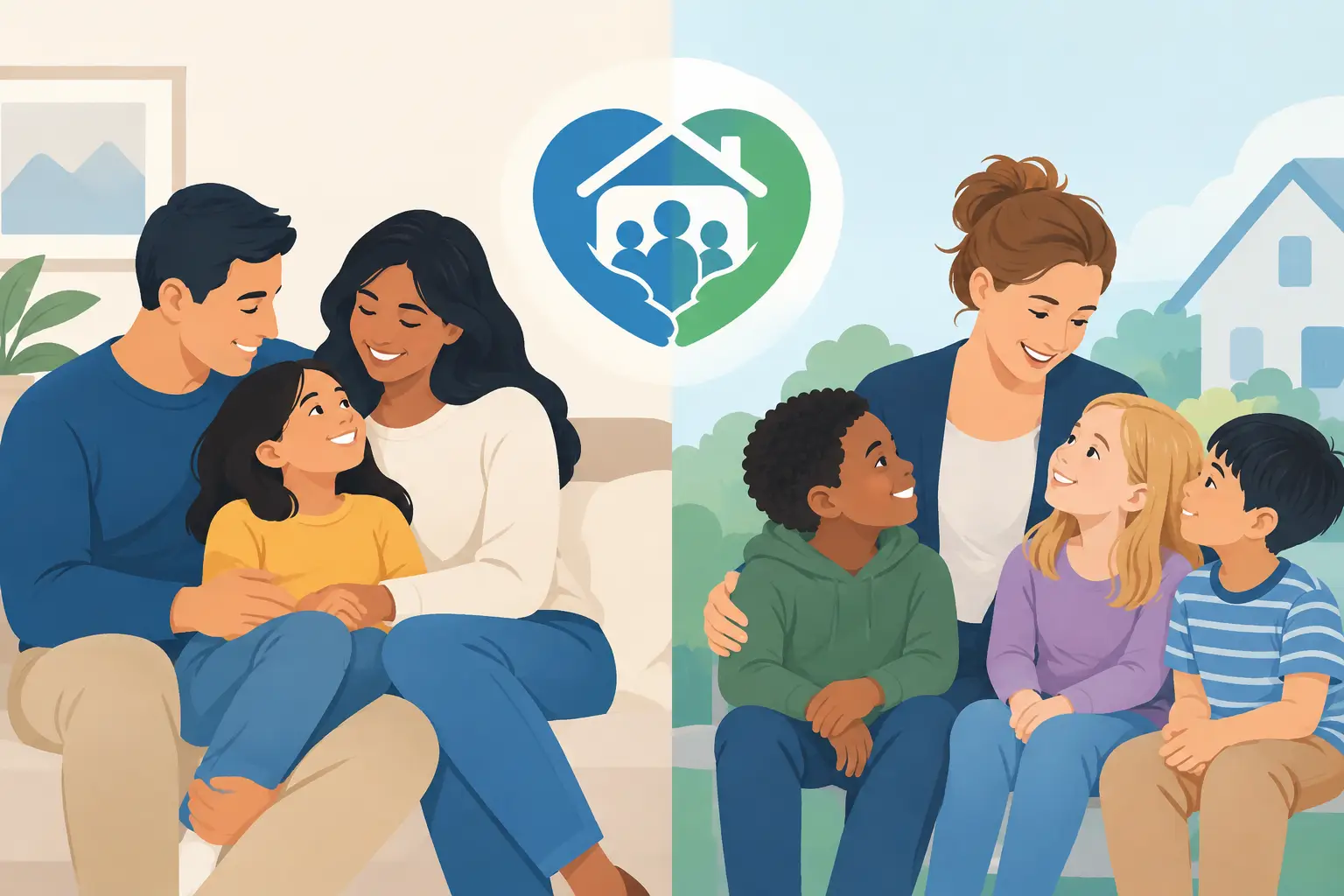
Private Adoption Versus Foster Care Compared
A family may begin with a phone call, a home study, or a child already waiting for consistency and care. When considering private adoption versus foster care, the most meaningful question is rarely which path is “better.” It is which path fits your hopes, your capacity, and the kind of relationship you are prepared to build with a child and the people connected to their story.
Both private adoption and foster care adoption can lead to a permanent, loving family. They also ask different things of prospective parents. Understanding those differences before moving forward can help you make decisions with more confidence, compassion, and realistic expectations.
Private Adoption Versus Foster Care: The Core Difference
Private adoption often involves an expectant parent making a voluntary adoption plan, frequently during pregnancy, and selecting an adoptive family for their baby. It can also include private adoption of an older child in certain circumstances. The process is typically guided by an adoption agency and adoption attorneys, with attention to the expectant parent’s needs, choices, and legal rights as well as the adoptive family’s preparation.
Foster care adoption involves children who have entered the child welfare system because their families could not safely care for them at that time. The first goal in foster care is usually reunification, meaning the system works to help children return safely to their parents or relatives when possible. Adoption becomes an option only when reunification is no longer possible and parental rights have been legally ended.
That distinction shapes nearly every part of the experience. Private adoption is generally a planned adoption process from the beginning. Foster care begins as temporary care for a child, even when adoption may later become possible.
Private adoption centers voluntary choice and planning
In a private adoption, an expectant parent may choose the family they feel is right for their child. They may want to learn about your values, home, relationships, traditions, and hopes for parenting. They may also make decisions about communication, hospital preferences, and the level of openness they would like after placement.
For adoptive families, this can mean sharing a genuine picture of who you are rather than trying to present a perfect one. It also means recognizing that an adoption plan is deeply personal. An expectant parent deserves space, unbiased information, and support to decide what is right for them. They can also decide to parent. No adoptive family should view a match as a guarantee until all legal steps are complete.
Foster care begins with a child’s immediate need for safety
Children in foster care may be infants, school-age children, teenagers, or siblings who need to remain together. Many have experienced loss, instability, trauma, disrupted relationships, or long periods of uncertainty. They may need parents who can offer patience, advocacy, predictable routines, and support through complex feelings.
Families who enter foster care need to be emotionally prepared for reunification work and for ongoing relationships with relatives, caseworkers, therapists, schools, and other members of a child’s support network. Foster parenting can be a meaningful way to care for children, but it should not be approached as a shortcut to adoption.
How the Experiences Can Differ
There is no single timeline, cost, or outcome for either path. State rules, a child’s circumstances, legal proceedings, and individual preferences all matter. Still, a few differences can help clarify what each journey may ask of you.
Timing and uncertainty
Private infant adoption can involve waiting to be selected by an expectant parent. The timing may be difficult to predict. A family may be matched quickly, wait longer than expected, or experience a changed adoption plan if an expectant parent chooses to parent. That uncertainty can be tender and challenging, even with thoughtful preparation and support.
Foster care timelines can also be unpredictable. A child may enter your home with reunification as the case goal, and the direction of the case can change as the court and child welfare team assess what is safest. When adoption does become the plan, the legal process may still take time.
The difference is not that one path has certainty and the other does not. Both involve uncertainty. The source of that uncertainty is different.
Openness and lifelong connection
Many private adoptions today include some degree of openness. Open adoption can look different for every family. It may include letters and photos, phone calls, video calls, occasional visits, or a combination of communication that everyone agrees feels healthy and appropriate. Openness is not about replacing anyone’s role. It is about giving a child truthful, age-appropriate access to their own history and important connections.
Children adopted from foster care may also have continuing relationships with siblings, grandparents, parents, or other relatives, depending on their circumstances and what is safe and appropriate. Maintaining those connections can be especially meaningful for children who remember their family of origin, their community, and the life they had before adoption.
In either setting, adoptive parenting means making room for a child’s full story. Love does not require a child to leave their past behind.
Costs and available support
Private adoption typically involves agency services, legal services, home-study requirements, counseling and support for expectant parents, and other adoption-related expenses. The details vary widely by situation and state law. Clear financial conversations early in the process are essential. Ethical agencies will explain what services are included, what expenses may arise, and how funds are handled.
Foster care adoption is often lower cost to adoptive families, and financial assistance or post-adoption resources may be available for eligible children. That does not mean it is emotionally or practically simple. Families may need to coordinate therapy, educational services, medical appointments, and other supports that help a child heal and thrive.
The best question is not simply, “What will this cost?” It is also, “What support will our family and this child need over time?”
The parenting needs may look different
Every child is an individual. A baby placed through private adoption may need parents who are ready to honor an open adoption relationship from the earliest days. An older child adopted privately or through foster care may have established memories, relationships, preferences, and questions that deserve respect.
Some children in foster care need parents with flexibility around behavior, attachment, school transitions, and therapeutic care. Parenting with trauma awareness is valuable in all adoption, but it may be particularly central for children who have experienced multiple losses or placements. Being willing to learn, ask for help, and adjust your expectations is an act of care, not a sign that you are unprepared.
Questions That Can Help You Decide
You do not need to have every answer before beginning. But honest reflection can help you identify the path where you can show up most fully for a child. Consider these questions with your partner, support system, or adoption professional:
- Are we prepared to support reunification if we foster a child, even if we hope to adopt someday?
- Do we feel ready for an open adoption relationship with an expectant parent or birth family?
- What age range, sibling considerations, and parenting needs can we realistically embrace?
- How will we care for our own emotional well-being during a process that may include waiting, grief, changing plans, and uncertainty?
Your answers may change as you learn more. That is normal. Many families begin with one assumption and discover that another route better matches their strengths and the needs of children they hope to parent.
Support Matters Before and After Placement
No one should have to make these decisions alone. Whether you pursue private adoption or foster care adoption, meaningful support should include more than paperwork and a home study. You deserve education that prepares you for real conversations, guidance through legal and hospital steps when relevant, and a team that treats every person involved with dignity.
At Going Adoption and Surrogacy, families are encouraged to ask direct questions, move at a thoughtful pace, and prepare for the lifelong nature of adoption. Expectant parents deserve the same respect: compassionate counseling, practical support, and room to make informed choices without pressure.
The right path is the one that allows you to offer a child not only a home, but also steadiness, truth, and a family prepared to keep learning alongside them.