
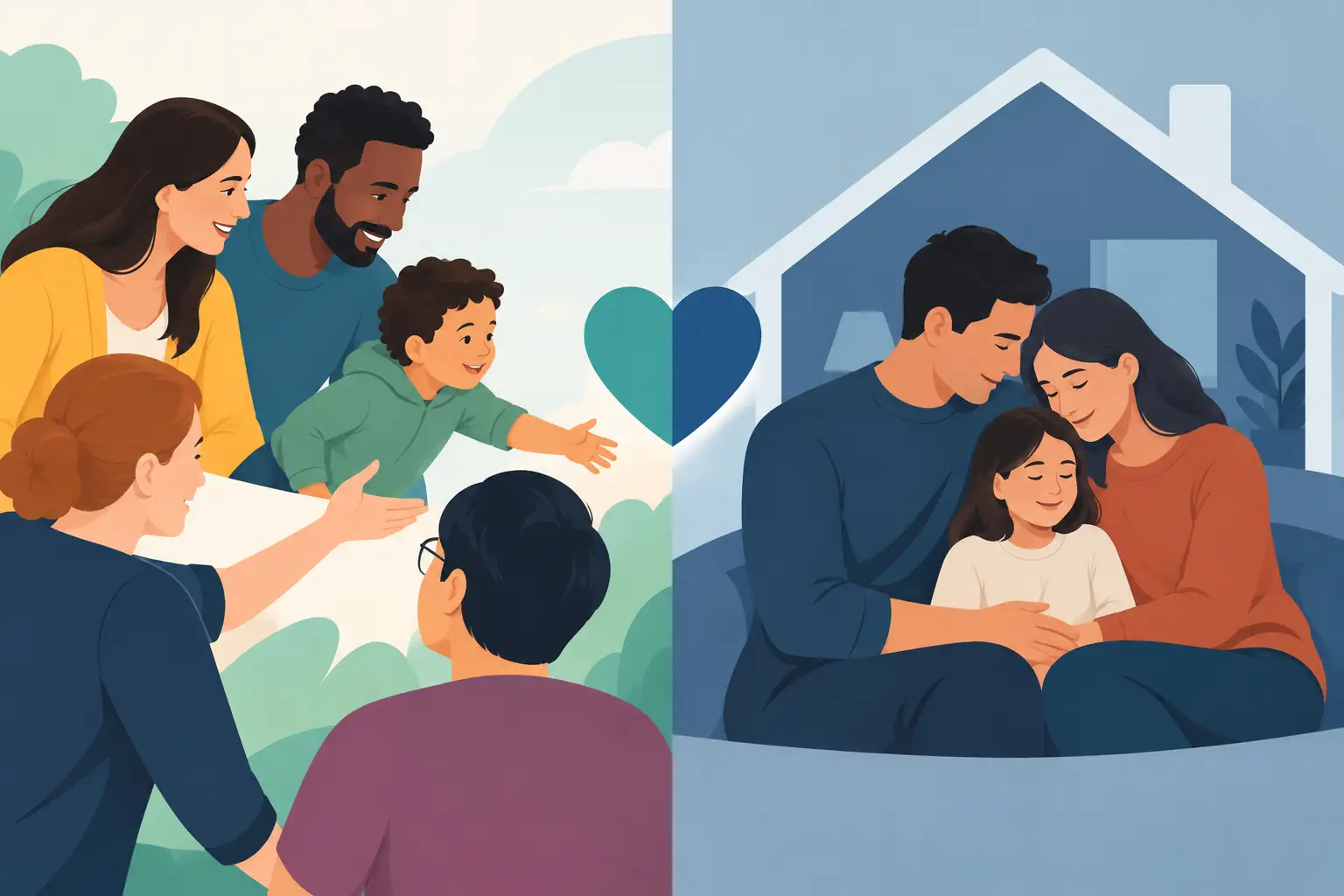
Open Adoption Versus Closed Adoption Explained
A hospital plan, a first visit, a birthday photo, a question about family medical history years from now – adoption relationships can take many forms. When families compare open adoption versus closed adoption, they are often looking for a clear answer about what contact will look like after placement. The more honest answer is that every relationship needs its own thoughtful plan, built around consent, safety, and the child’s long-term well-being.
The language can feel high-stakes because it is. Expectant parents deserve control and respect as they consider their options. Adoptive parents deserve preparation for the emotional and practical responsibilities ahead. Most of all, children deserve truthful, age-appropriate connections to their story. Understanding the options can make space for decisions that feel informed rather than rushed.
What is open adoption?
Open adoption is an adoption arrangement in which birth and adoptive families have some degree of ongoing contact or exchange of information after placement. Openness is not one fixed model. For one family, it may mean letters and photos exchanged through an agency. For another, it may include texts, video calls, shared milestones, or occasional in-person visits.
The level of contact is discussed before placement, often with support from adoption professionals, and should reflect what everyone can realistically maintain. A relationship does not need to look like friendship to be meaningful. It can be respectful, predictable, and centered on helping a child know that they are loved by the people connected to their life story.
Open adoption does not mean that adoptive parents and birth parents share legal parenting roles. After an adoption is finalized, adoptive parents have the legal rights and responsibilities of parenthood. Openness is about connection and information, not confusion about who makes daily parenting decisions.
Why many families choose openness
For children, age-appropriate openness can reduce unknowns. Instead of wondering why an adoption plan was made or imagining an answer alone, a child may have access to truthful information over time. They may also have opportunities to know their birth family as real people, when contact is safe and appropriate.
Expectant and birth parents may find comfort in receiving updates and seeing that their child is cared for. Adoptive parents can gain a fuller understanding of their child’s family history, medical information, and personal roots. These benefits are meaningful, but they do not remove the need for boundaries, communication skills, and support.
What is closed adoption?
Closed adoption generally means there is no ongoing direct contact between birth and adoptive families after placement. Identifying information may not be shared, and communication may end after the adoption process is complete. In some situations, families may receive non-identifying medical or social history without knowing one another’s names or locations.
A closed arrangement can be chosen for many personal reasons. Someone may need privacy, distance from a difficult family situation, or emotional space to heal. Safety concerns can also shape what contact is appropriate. Closed adoption should never be treated as proof that a birth parent cares less, or that an adoptive family is less committed to honoring a child’s background.
At the same time, “closed” does not always mean information disappears forever. Laws, agency records, changing circumstances, and a child’s questions as they grow can all affect what may be available later. Families should preserve every piece of permitted medical and family-history information they receive. Even small details can matter to a child in the future.
Open adoption versus closed adoption: the space in between
Many adoptions are neither fully open nor fully closed. A semi-open adoption may allow contact through an agency, a secure online platform, or another agreed-upon channel without sharing direct identifying details. Families might exchange annual letters and photos, for example, while keeping addresses private.
This middle ground can be especially helpful when direct contact feels too intense at first. It allows each person to protect their privacy while creating a path for meaningful updates. It can also evolve. A birth parent who initially requests letters may later feel ready for a call. An adoptive family may learn that a child would benefit from more direct, supported communication as they get older.
Flexibility is valuable, but it should not mean making promises that no one can keep. A good plan considers practical realities: how often updates will be shared, what kind of photos feel comfortable, whether visits are possible, who will coordinate communication, and what happens if circumstances change.
How to choose an arrangement with care
There is no universally right level of openness. The right arrangement is the one that is voluntary, safe, and sustainable for the people involved. It should also reflect the needs of the particular child, not a script about what adoption is supposed to look like.
Expectant parents considering adoption should have room to name what they need without pressure. They may want updates, privacy, ongoing contact, or time to decide. Adoptive families should be honest about their capacity and willing to learn how to speak about adoption openly and respectfully at home.
Before an adoption plan is made, it helps to talk through practical questions in detail. What kind of contact feels comfortable? How frequently will communication happen? What boundaries are needed around social media, extended family, or unplanned visits? How will the adults communicate if there is a misunderstanding? Clear conversations early on can prevent assumptions from becoming hurt feelings later.
In Florida, families should also receive clear legal guidance about any post-adoption contact agreement. The meaning and enforceability of these agreements can vary by state and by the details of a case. An agency and qualified adoption attorney can explain what an agreement does and does not provide, so no one relies on informal expectations alone.
Building a relationship that can grow with a child
An adoption relationship is not finished at placement. A newborn becomes a toddler, then a school-age child, then a teenager with new questions and a stronger voice. What felt right at the beginning may need to be revisited with care.
For adoptive parents, keeping adoption part of everyday family language can help a child feel safe asking questions. This does not require sharing adult details before a child is ready. It means answering honestly at an age-appropriate level, avoiding secrecy, and letting a child know their feelings are welcome. A child can feel grateful, curious, sad, proud, angry, or all of these at different times.
For birth parents, ongoing contact can bring both reassurance and grief. A photo update may be deeply meaningful one month and hard to open the next. Compassionate support recognizes that these feelings can coexist. No one should be expected to manage them alone.
When communication becomes difficult, a neutral professional can help families return to the commitments behind the plan: respect, honesty, privacy, and the child’s well-being. Going Adoption and Surrogacy supports families through the conversations and transitions that can arise before placement and long after it.
A decision rooted in respect
Open adoption can offer connection. Closed adoption can offer needed protection and privacy. Semi-open arrangements can create a thoughtful bridge between the two. None of these choices should be reduced to a label or judged from the outside.
The most caring next step is to ask honest questions, learn what support is available, and create an adoption plan that leaves room for every person’s dignity. When adults approach those decisions with patience and accountability, they give a child something lasting: a story held with truth, care, and love.